Showing posts with label trade unions. Show all posts

Tuesday, January 11, 2011

Tory proposals on sacking people are both useless and criminal

Mass sackings: welcome to The Great Conservative Economic Strategy.

Another fine display of 21st century British politics took place yesterday when David Cameron dropped the bombshell on the millions of unwitting voters that it should be made much easier to sack workers in this country ("Firms get power to sack the slackers", Telegraph).

Now, of course, the Tories don't have a mandate for that. They never mentioned any of their "employment reforms" at any stage of the election campaign. They didn't because they knew that voters would punish them for that. And in fact, at this point, if you're an ordinary worker and you still think voting Tories will do you or the country any good, then you may as well chop your own bollocks off. The outcome will not be dissimilar.

It's astonishing that, in the face of the biggest crisis in sixty years, The Great Conservative Economic Strategy amounts to the sacking of half a million public workers, even easier sacking procedures for everybody else and -of course- higher costs of living.

The Tories' proposal is based on the contempt they have for ordinary workers. If you are an employee, you are - by default - a burden, an irritant, a disposable pain in the arse. Whatever the issue, financial or otherwise, you're the first one who should bear the brunt. No matter how much this may undermine morale or loyalty to the company. No matter how insecure it makes you feel. You're not a person. You're just a cheap pawn.

David Cameron's proposed new "Employment Charter" starts from a fallacy the size of the Millennium Dome: the ridiculously simplistic illusion that if you decrease protection at work, employment levels will rise automatically.

This is so all over the place that it's difficult to know where to start. But let's just say that the post-1997 implementation of the minimum wage and new maternity rules in Britain were followed by the lowest dole rates in thirty years. Look, instead, at the swirl of anti-Union laws and other measures brought in by Thatcher. It did nothing to even slow down the sustained high unemployment rates that kept looming large over the 1980s and 1990s.

Or consider Italy and Spain, where the last ten years saw most extreme forms of casualisation and disposable employment steamrolled in. Their unemployment levels are still looking extremely sorry, in fact worse even than before.

The second fallacy is that the Conservatives are making it sound as if the current British labour market was stifling and inflexible, while it is already one of the most boss-friendly in the EU as it's cheaper and easier to get rid of staff in Britain than it is in most of its counterparts.

Currently, bosses already enjoy the possibility of hiring as many agency or casual workers as they please. These come with no tie whatsoever. They are literally disposable.

If, however, the same boss saw fit to recruit "properly", there is a probationary period of up to 6 months in which he/she can sack said employee on a whim - literally - no notice, no motive, no compensation. Nowt.

After that, the boss will still have up to 12 months in which he/she can still fire him without any possible fear of being done for unfair dismissal or forking out a penny in statutory redundancy pay.

At this point, you will already concede that if a manager hasn't clocked who the slacker is without successfully rectifying the situation, it is he or she who should be sacked and not the worker.

And it's not over yet. While unfair dismissal claims can be brought after a year, you have to work a total of 24 months in order to be entitled to the lowest possible allowance of statutory redundancy, which - please note - is by far the cheapest in Western Europe.

However, egged on by the British Chamber of Commerce, David Cameron thinks that all of the above amounts to "too much red tape" and that the period that allows staff to submit unfair dismissal claims should be increased from one to two years.

But the icing on the cake is the Coalition's proposal to levy a charge on workers who decide to still fight their corner. This may be vintage Tory philosophy, but in this case it just borders on the criminal - as it crucially links access to justice not to whether you're in the right or not, but to whether you can afford it.

And, needless to say, it also ignores the fee that plaintiffs already pay their lawyer, or their union in the form of fees, if it is they who provide legal counsel.

Incidentally, unions rarely decide to pursue claims that they themselves think will lack weight. The amount of pre-screening that is done prior to deciding whether to gamble on a worker's claim is immense. And that's without even including the conciliation and arbitration stage.

And even so, official figures say that, in the first quarter of last year, just 11% of cases taken to an industrial tribunal were successful - and a puny 5% for constructive dismissal. Amazingly, this is the system that bosses complain is "weighed against them" and is "affecting employment levels".

The Conservatives are mistaking increased turnovers with higher employment rates. Their new proposals will do absolutely nothing to get people back to work.

All they will achieve is a system where it's easier to sack unfairly and without scrutiny and a workplace where it will be even more difficult, often impossible, for an honest worker to fight bullying and victimisation or to seek protection against unscrupulous employers.

Sunday, June 06, 2010

Ed Balls sets new standards for the meaning of hypocrisy

Why the wannabe Labour leader has the coherence of a spraying hosepipe.

This is a man who sat at the core of the whole New Labour project. He was part of the inner circle since 1994. He went along with whatever was agreed. He made significant contributions to all aspects of government policy.

Now Ed Balls has decided to involve himself in a game of triangulations, positioning and politicking so pathetic that, compared to him, even Tony Blair would look more genuine.

Two weeks ago he came out with the revelation that Britain was "wrong" to join the Iraq war, without a shred of dignity or a passing thought that he would just be viewed as a spineless opportunist.

Like Mark Steel commented in the Independent, Balls could herald a new Labour tradition, that of opposing wars after they've ended: "Even a month ago [Balls and Miliband] said nothing, so they've all just changed their minds, have they?", wrote the comedian.

That was about Iraq. But Balls didn't stop there. His article in today's Observer is further proof that this second generation New Labourite only believes in two things: hypocrisy and opportunism.

Probably aware that his chances to become Labour leader are getting slimmer by the minute, Gordon Brown's economic adviser decided to raise his profile by turning to the Daily Mail brand of populism and cynicism - that is playing workers off against each other.

Essentially, Balls is calling for an end to the free movement of labour within the EU.

"We were wrong to allow so many Eastern Europeans into Britain", he writes. "Europe's leaders need to revisit the Free Movement Directive, not to undermine the union, but to make it economically and politically sustainable". Those words alone set him automatically to the right of the Tory party on immigration.

Balls, however, went further. Look at this staggering piece of hypocrisy, arrogance and subconscious post-colonial instinct:
"While it is true that one million British people do migrate to work in the rest of Europe, they are more likely to be working for higher wages in Brussels, Frankfurt and Milan than undercutting unskilled wages in the poorer parts of Europe."
This argument is infinitely worse than what you hear from the likes of UKIP. Because at least UKIP has the coherence and the intellectual honesty to argue in favour of Britain pulling out of the EU altogether. Instead, Balls' opinion is not just flawed, it's obnoxious.

1. Apparently it's ok for the British to take other people's jobs, the good ones in fact, but it's not ok for other people to take our jobs, even the shit ones. One rule for us and another for everyone else. Proper School of Post-colonialism;

2. Balls also displays a worrying lack of perception which, for an aspiring leader, is very bad news. Leave aside the crass sweeping generalisation that Brits in the EU work "for higher wages in Brussels, Frankfurt and Milan", as if they were all investment bankers, market analysts or fashion gurus - which is total balls (I know, I couldn't help it). Balls is totally unaware of the impact that significant chunks of the million British people living in the EU are having on certain areas;

3. Entire provinces in Spain have seen property prices hugely distorted by the high influx of hundreds of thousands of Brits in the past ten years. Not only have locals often been priced out of the property market, but the strain on public services has been significant, especially as thousands of Brits don't bother to register with the local councils, with the result that allocated funding to local hospitals and services doesn't correspond to the actual local needs.

There's also a final atrocity in Balls' article. Exactly like with Iraq, the wannabe Labour leader spews up eye-watering levels of hypocrisy when he writes that immigration undercutting unskilled wages was made "worse" by "the failure of our government to get agreement to implement the agency workers directive"(!).

Another Road-to-Damascus conversion. How do you call that? Cheek? Nerve?

On the TUC blog Owen Tudor just stopped at "chutzpah":
"What [...] the trade union movement argued all along – for over a decade - was that, with labour market regulation like the agency workers directive and the posted workers directive, migration would not set worker against worker, allow employers to undercut existing terms and conditions (regardless of the nationality of the victims), or lead to a downward spiral of wages".
Ed Balls sat at the core of the Labour government which, just over six months ago, took the active decision not to implement the agency workers directive, leaving 1.3 million workers in the most precarious and vulnerable situation.

Quite simply, there is enough evidence to suggest that Ed Balls is all over the place. He's got the coherence of a spraying hosepipe and, to quote the excellent Paul Sagar, "he comes across like a slimy, self-satisfied, mendacious and slippery political manipulator".

Make him Labour leader and the Tories are guaranteed half a century in office.

Sunday, March 28, 2010

Church scandal, BA strike, Politicians for Hire, Suede at RAH...

...that was the week that was...

The things I would have blogged on last week are piling up:

- the escalating Catholic church sex abuse scandal. This week's revelations were the most shocking, with the news that, in 2001, the current Pope ordered a cover-up of up to 200 cases of paedopriests and nonces.

But the most ridiculous bit is when you hear the Vatican's defence line.

The other day, top Cardinal Angelo Bagnasco repeated that "the phenomenon of paedophilia has been tragically widespread in different sectors and various categories of people and various places, even non-Catholic". Is that supposed to make it any better, you utter imbecile?

It's like having Fred West pleading mitigation on the grounds that "serial killers have always tragically been around, I'm not the only one";

- the 2nd BA strikes, along with the notion that nobody strikes for fun or because they feel like it - a simple fact that the press at large seem to have forgotten. Just look at Unite's Dossier of disgrace, highlighting the bullying and harassment that's been taking place against union members under the management of Willie Walsh;

- Channel 4's Politicians for Hire and the greedy, shameless, cringeworthy procession of former Blairite ministers begging for secret deals. I wish I could say "why am I surprised", given that the New Labour project could only have worked by removing any remaining trace of 'integrity'. And yet, seeing Stephen Byers, Geoff Hoon and Patricia Hewitt doing an Alan Partridge on telly was just gut-wrenching.

The politicians' responses at the end of each piece were just priceless. The succession of hollow disclaimers such as "Mr/Mrs [...] did not breach the MPs' Code of Conduct" was the equivalent of watching clear footage of a man punching a victim in the face followed by the same man's statement that he "denies any wrongdoing";

- Suede reforming after 7 years for a one-off gig in aid of the Teenage Cancer Trust at the Royal Albert Hall. Read Mark Reed's amazing review of the night here.

Tuesday, March 16, 2010

Comparing influence: Ashcroft vs Unite

For 13 years, Britain's unions have acted like a battered dog who keeps crawling back to its tormentor.

The acute observer may have noted that, whenever the scandal of multi-millionaire non-dom top party donor Lord Ashcroft is brought up, the Tories' default reaction is "yeah but the Unions too, they bankroll Labour".

Let's leave aside the long list of differences (technical, fiscal, substantial, ethical, practical, etc) between the two types of "donations". Let's leave aside "solemn and binding" promises.

The best way to gauge weight and influence as carried by Lord Ashcroft vs the Unions is to check the relationship between donors and political parties.

Not a single senior Tory has publicly said a bad thing against the Belize-based tycoon. They said a lot of things, but nothing bad. And how could they, given that the Baron has pumped around £5m into Tory coffers?

Now look instead at how Labour is actively laying into Unite the Union in the middle of a delicate industrial dispute with British Airways.

There's a trade union "proudly" handing around £3.6m a year to the Labour Party and publicly announcing that they made "tens of thousands of calls" to their members urging them to vote Labour at the forthcoming elections.

So what does the Labour Party do in return?

Public support would be too much, so forget that. How about neutrality and balance in the midst of the biggest industrial dispute of the year so far, that is the British Airways strike?

Fat chance. First, Transport Secretary Lord Adonis echoed BA boss as he called the strike "totally unjustified". "I absolutely deplore the strike", the unelected Baron told the BBC's Andrew Marr, adding that "it poses a threat" to the future of BA.

But Adonis went further. Sounding like your average Daily Mail column, he warned that "passengers should not be held to ransom by [Unite]".

Yesterday Gordon Brown joined in. Again, he slammed the strike as "deplorable and unjustified". Can you imagine David Cameron or George Osborne using those words against their biggest donor?

For 13 years, Britain's unions have acted like a battered dog who keeps going back to its tormentor.

With few exceptions, like the Fire Brigade Union (which, to their honour, disaffiliated in 2004), the unions keep getting the shit kicked out of them by the Party but then always crawl back, cheque in hand, to Master Labour.

Saturday, February 20, 2010

Why is Corus' closure not on the front pages?

As a hammer blow is about to be dealt to the North-East, the government's lack of political will is there for everyone to see.

The media have decided they're not really interested in what could turn out to be the biggest casualty of the economic downturn in Britain so far.

After all, it's a complex and depressing story: the Corus steel plant in Teesside is about to shut down, with 1,600 skilled jobs about to be laid to waste along with a staggering further 8-10,000 job losses in the supply chain.

Much more has been said about Gordon Brown appearing on Piers Morgan's Life Stories or David Cameron's daughter breaking his i-Pod. A regional disaster with a guaranteed knock-on effect is about to take place and most people don't even know.

And yet causes for outrage are there aplenty. Teesside has been leading world steel manufacturing since 1917. Stretching from Redcar to Middlesbrough, it features the largest blast furnace in Europe. Privatised by the Thatcher government in 1988, the company was bought by Tata Steel for £6.7 bn in 2007, creating the world's fifth biggest steelmaker.

So how can it be that, with a general election looming and with every economist warning that extensive job losses pose the biggest threat to the economic recovery, we are allowing such a bedrock of our economy to go down - with devastating consequences for a whole region?

Why can't the government go beyond half-baked claims that they're "prepared to help the company and to work with any potential buyer" and simply take the company by the jaffas and ferry it across to better times ?

Some would tell you that the answer lies in a combination of the massive downturn and British steel being no longer competitive. But there are two flaws in this argument.

Firstly, the government has offered financial support to an ailing sector before. In October 2008, it made £500bn available to the banks in loans and guarantees, forking out financial sums that we didn't even know existed. Sure, it was inevitable, many say, as the entire economy was about to come crashing down along with the banks.

And yet an aid package to rescue Corus would be only a tiny fragment of the Great Bail-Out of 2008. More importantly, it would save the government billions in benefits, re-training schemes and the additional social costs of an entire area.

Also, it would help a sector that will always be viable. Steel will always be needed and British companies will have to buy steel anyway, all the time, except that they'll have to import it from abroad, dealing a further blow to an already embarrassing import/export balance - currently lagging at the bottom of the EU table. Steel manufacturing in the North East is also high quality. Its main competition has rarely stemmed from cheaper countries.

And in fact, Corus has received a number of offers, except that nothing has been finalised. According to Unite the Union, this is a "smokescreen" and a "disgraceful charade": "Serious offers have been made to Corus that would allow production to remain at the plant", said Terry Pye of Unite, "but the management has dismissed them all out of hand".

The suspicion that the sale is being thwarted "for competitive reasons" was also mentioned by the Financial Times: "Ray Mallon, Middlesbrough’s elected mayor, claimed a credible consortium interested in buying the plant had received no response from Corus to a request to 'look at the books' and to allow due diligence".

Nor are people convinced by claims that EU state-subsidy laws would rule out serious government intervention: last year, rules on both subsidy and state loan guarantees were extensively relaxed (at least until the end of 2010) and, according to the European Commission, by April 2009 ten countries had already taken advantage of the more lax system, the most popular example being Germany granting Opel €4.5bn in state guarantees.

It has been estimated that the German government has put aside €115bn to help any company in any industry, the only pre-requisite being that they are "victims" of the crisis and that they were performing well until the downturn kicked in.

It is purely a matter of how high different governments value the role played by manufacturing in society. In Britain, so it seems, it's far from being a priority. Alas, thousands of workers and their families are about to suffer the consequences.

Friday, January 22, 2010

Top Tory brands Cadbury's workforce 'whingeing'

Press release from Unite the Union.

Workers from Cadbury's Marlbrook factory in Herefordshire are furious over comments made by Tory MP Bill Wiggin describing the workers who now face a very uncertain future as 'whingeing'.

Bill Wiggin said on BBC Hereford and Worcester: "Who wants to hire a whingeing workforce when you can have a positive upbeat one".

Unite, the union representing the workers, has charged Mr Wiggin with a complete failure to represent his constituents working at Cadbury, who have been told job cuts across the company are inevitable.

Mr Wiggin refused to sign an Early Day Motion calling for Cadbury to stay independent. On 15th January on BBC Hereford and Worcester, Mr Wiggin told listeners that he was not a fan of Unite - the union campaigning to protect his constituent's jobs - and the campaign would not make any difference as he believed Cadbury would not sell and stay independent. How wrong Bill Wiggin was.

On 20th January on the 8am news on BBC Hereford & Worcester, Mr Wiggin decided to again go on air, expressing to listeners that the Cadbury Marlbrook workforce should be more positive about the situation, as the new employer will not take kindly to whingeing.

Unite's national officer Jennie Formby said: "Mr Wiggin is a disgrace to his constituents and has done Cadbury's workers a great disservice. Voters will remember when this MP turned his back on Cadbury's workers in their hour of need.

"Cadbury's workers face an uncertain future, they are campaigning to protect their jobs - it's not whingeing, it's standing up for their livelihoods, homes and their families. This is a classic example of the uncaring Conservatives."

The union's convenor at the factory has written to Mr Wiggin to express the workers' fury.
***
Also read: Birmingham Mail- "Tory MP Bill Wiggin calls Cadbury workers 'whingeing'".

Friday, November 13, 2009

Pay each time you take a dump

You can say what you like about Britain's wealth creators, but you can't accuse them of lacking imagination when it comes down to cutting costs.

Britain's route back to 19th century working practices is looking smoother every day.

News just in is that one of the most successful private-owned companies in the UK, a meat-processing giant with an annual turnover of £466.3m, cut their workers' wages each time they go to the toilet.

Having collected evidence from over 100 workers, Unite the Union has denounced the ongoing practices at Dunbia, where workers are required to clock in and out each time nature calls. According to Cathy Rudderforth, Unite Lancashire official, "it's outrageous that in 2009 workers have to endure the indignity of clocking out for toilet breaks".

Unite have also accused the company of refusing talks with the unions. On their part, Dunbia have come up with the retort that weekly bonuses are paid to compensate for toilet breaks-related cuts. But if that's the case, then what's the point?

And are we right to guess that the policy does not apply to managers each time they take a dump at work?

Let's just hope that Dunbia's appalling practices don't pave the way for Britain's "wealth creators" at large. Otherwise a simple cistitis or spell of diarrohea at work will not just be painful, but costly as well.

Thursday, November 12, 2009

1 million affordable homes

The long-term benefits of public intervention in the housing sector.

Most people are aware that waiting lists for council homes have hit an all-time high. Trouble is, courtesy of industrial-scale tabloid bombardment, most people would probably blame immigration and single mothers.

The reality, however, is different.

Here's the facts. It is true that the queues are dramatic. The crisis brought a massive increase in repossessions (65,000 homes this year and 45,000 in 2008). At the start of 2009, 200,000 extra families (not people, families), were added to already long queues: 1,8 million families are waiting their turn as opposed to 1.6m in 2008.

Yet how many people are aware that there are one million fewer homes available for rent from councils and housing associations than in 1979?

Read that again: one million fewer affordable homes than twenty years ago. And don't forget that, compared to 1979, today the UK is home to an extra 4.5m people, which can only highlight the urgency of the issue, especially as construction in the private sector has also ground to a halt.

Earlier this year, it emerged that in Scotland there are fewer council houses for rent now than there were 50 years ago (see here for details).

This is why today UNISON launched a report "urging the government to remove all legal and financial barriers to council house-building", calling for 1 million council homes to be built in the lifetime of the next Parliament.

The benefits are obvious. Along with a new generation of high-standard sustainable homes (learning from the recent past mistakes of estates built 'on the cheap', both in the private and public sector) and the chance to replan and regenerate entire areas according to local needs, the programme would benefit the wider economy. Think of all the jobs and training opportunities that would be created and the impulse it would give to the supply chain.

Yes, it would be a massive public investment, but it's one that would bring both long-term benefits and be definitely in the interest of the wider public.

According to UNISON general secretary Dave Prentis, council housing "can also help to prevent another housing and debt bubble by providing more affordable homes".

Sunday, October 25, 2009

Nationwide support for Postal Workers

Public support for the CWU strike.

You saw the headlines of despair last week. Those Christmas cards allegedly gathering dust in depots because of the nasty costly ugly suicidal striking postmen.

Well, the public turned out more understanding and sympathetic than the press would have you believe.

A ComRes poll commissioned for BBC Newsnight revealed on Thursday that 50% of those surveyed sympathised with the postal workers as opposed to 25% backing the Royal Mail management in the dispute.

More, "the vast majority of people do not think the Royal Mail should be privatised (68%)". Details of the survey to be found here (pdf).

Thursday, October 22, 2009

Stand up for the postal strikers

Did you know that Royal Mail's chief executive takes home £3m a year- 166 times the salary of an average postal worker?

I wasn't sure whether the two-day strike announced by postal workers would be a good idea. I wasn't sure because a) I knew nothing about the details and b) at least nine news reports out of ten that I'd spotted or overheard fed a negative angle - mainly related to Christmas cards piling up.

It's very easy to be against a strike. Most are disruptive, inconvenient, dramatic - a pain in the arse, basically. But many people don't even bother to find out why walkouts are called. It doesn't involve Number One, does it? Reading about strikes is not a 30-second job either, it's taxing and, most likely, depressing.

Because if people bothered to find out, they'd simply register that the same may happen to themselves and their own job. Mounting pressure from bosses, unrealistic targets, pushy requests for overtime, subtle and not-so-subtle bullying practices, and so on, over a long period, until you've had enough.

All of the above justified by glaze-eyed soundbites and formulas that no-one quite fully understands: modernisation is one of them, and the other is "figures are down".

But if we always just think of Number One, who's going to stand up for us when it's our job that is put on the line?

When I finally had the opportunity to read about the Royal Mail dispute, it dawned on me that, most people -including myself- don't have the slightest clue of how postal workers are organised, and yet they pontificate. This excellent article, written by a postman, opened my eyes.

Very articulate, and very easy to read, it explains exactly what's going on in their offices: the myths about the dearth of 'traditional' mail; the understaffed sorting centres; the rising volume of work; the effects of today's part-privatisation (whereby Royal Mail does the work and private mail companies take the profit); the increased use of part-timers on 'flexible' contracts being used to undercut staff; the obsession with corporate customers.

Though I wasn't at all surprised, I also found out that bosses at the Royal Mail earn obscene amounts of money. I expected a lot, but not as much. Adam Crozier, the chief executive, takes home £3m a year, 166 times the salary of an average postal worker. It is estimated that his money alone could save at least 167 post offices around Britain. Just to give you a perspective, last year, total profits at Royal Mail tallied £321m. Staff got a pay freeze this year and managers got massive bonuses worth thousands of pounds.

And I thought, how can we -the public- become desensitised to such humongous salaries at the top while the same companies talk of redundancies and modernisation? Surely not giving out billions just like that should become the priority, right? Surely we can understand why postal workers have had enough?

Wednesday, October 21, 2009

Casual, dynamic and crap: a tale of modern employment

Other countries are finally talking about it. Some have started to grasp that, especially in a recession, job insecurity is a liability and not an asset.

Tim started a job. An ordinary job like many others. Nothing fancy, some kind of admin position that pays about a grand a month, maybe a little less. He was told he'd start as a casual, today's best way "to get a foot in the door", while enjoying the benefits of a dynamic, modernised and flexible market.

It soon dawned on Tim that his working conditions weren't the same as his "permanent" colleagues. For instance, with no sick pay for casuals like him, that nasty ear infection that had him bed-ridden for a few days meant less money at the end of the month. Dynamism, basically.

Not only that. Being off sick again carried the modernised risk of his employers no longer calling him. Like it happened to that gangly bloke across the office floor. He missed a few too many days and they simply told him to get his coat. They can do that. There is no contractual obligation, nor are there any notice rights.

Of course, when they asked Tim to work ten days in a row, it was within his rights to say no but, again, he may have done so at his peril. When it comes down to it, who are his managers going to pick: the chap who's just doing his regular hours or the billy-no-mates with no life who's saying yes to each and every overtime request?

Tim remained a casual for 15 months. Fifteen months of dynamic, modernised insecurity playing on his mind, knowing that he was disposable at any moment.

And yet he was doing exactly the same job as those colleagues on a permanent contract. There was no 'casuality' in his job. It was no short-term stop-gap, no fixed-term project or maternity leave cover.

Being a 'casual' meant that his pay started basic and remained basic, that he was cheaper to hire, that he was sackable on a whim and enjoyed no sickpay entitlement, no holiday rights, no pension rights and no redundancy rights whatsoever. As older colleagues left or retired, they were gradually being replaced one by one by dynamic staff like Tim.

And this is what's happening all the time - and increasingly so. The calls for flexibility and modernisation of the labour market turned into a device to push down wages, erode rights and transfer 100 per cent of risks on the (casual) employee.

As previous recessions had been partly blamed on too much employment regulation, the dogma became that "employment-flexibility-will-benefit-society".

Sure, some benefited no doubt. Cutting costs on employment meant more profits and bonuses at the top. On the other side, however, vasts numbers of people remain precarious for years, unable to afford things and relying on credit for the most basic stuff. Chances are labour market flexibility and dynamism became some of the factors contributing to the country's widening income gap.

It's also interesting that the biggest recession in 60 years has taken place within the framework of the most flexible employment system since the 1930s - meaning that an unregulated labour market is no guarantee of business stability whatsoever. Not only that. In a downturn, think of the social impact of having millions of people losing their job with the shock absorber of a redundancy package as opposed to walking home completely empty-handed.

This is why other countries have finally started to grasp that, especially in a recession, job insecurity is a liability and not an asset. In Spain, the government and unions both publicly slammed CEOE, the CBI's Spanish equivalent, for using the recession as an excuse for more flexibility. "What we need is an entrepreneurial reform", said union leader Candido Méndez, adding that a culture of low salaries, cheaper redundancies and low investment "is not the solution".

Most surprisingly, similar words were uttered in Italy by conservative Chancellor Giulio Tremonti. Two days ago, he called for "an end to [labour] casualisation", adding that "permanent jobs should be the foundations of social stability". Mr Tremonti went further: "In the US, your pension funds depend upon Wall Street and, if the tide turns, you end up eating kitkats [living] in trailers and [will have to] deprive your children of an education".

In the UK, however, that's a non-debater. The one attempt to introduce guarantees for 'agency workers' after 12 weeks on a given job went up in smoke last week and, for all the renewed Tory talks of "social stability" and community cohesion (and with people like Iain Duncan Smith allegedly singling out patterns of "family breakdown"), the notion of reforming the labour market towards more job security is not even remotely on the agenda.

And yet, with more and more people either starting a family on shaky financial grounds or being put off altogether, increased employment protection would certainly help to revert the trend.

Sunday, October 18, 2009

Labour betraying agency workers

The government turns its back on the Agency Workers' Directive.

With last week's Tory conference was peppered with proposals coming straight from the Thatcherite book, Labour was handed a slight chance to make up some lost ground. Instead, they've just scored another massive electoral own goal.

This weekend, in fact, to the cheers from the CBI and other employers' organisations, Labour announced they're backtracking on their promises to finally adopt the European Working Directive, a set of measures aimed at protecting the most vulnerable workers in Britain while, at the same time, preventing full-time staff being undercut by cheap agency recruits.

The government has now said that the Agency Workers Directive will not be implemented until October 2011, meaning that it will be left to the whim of the next Tory government - meaning, in turn, that it will probably be scrapped.

Aimed at 1.3 million agency workers in Britain, the Directive intended to introduce equal treatment on basic pay, redundancy rights, breaks, maternity, holiday entitlements and time off. This would have covered agency workers after 12 weeks on a given jobs -ending the current discrimination between casual and 'direct' workers.

More and more firms are in fact gradually replacing permanent staff with agency workers, as the latter are automatically on the back foot: cheaper to hire and instantly sackable, with no redundancy rights and not even the right to a written statement of their contract. A recent study by the TUC confirmed what everybody already knew: that "temps" are by far the worst treated workers in the country.

It was a chance to mark a clear difference between those who support tax cuts for millionaire heirs and those who defend the most exploited, precarious and vulnerable workers in the country. Labour missed it.

Tuesday, September 15, 2009

Pay freeze? Not for the wealthy!

In real terms, both minimum wage and dole money are taking a cut. Executive pay, in the meantime, is up by 10 per cent. By Stan.

Supporters of pay freeze have been getting cockier for a while. A few months ago, while attacking the UK's "onerous employment legislation" (with not an ounce of irony), Luke Johnson in the Telegraph argued that:

"An employer-organisation can go to hell in a hand basket, but God forbid a single employee has to take even a small reduction in salary! Yet in a deflationary environment, the value of constant money is rising – and with unemployment soaring and firms struggling to survive – why shouldn't workers share the pain?"

The Torygraph's target? Well, like the Daily Mail, nurses, teachers and ordinary workers, guilty of asking for a 2 per cent rise during a recession.

And yet, little is said about the fresh news that executive pay has risen by a whopping 10% in the last year. Just to keep into perspective, remember that in the meantime, the National Minimum Wage is going up by 1.1% -below the inflation rate for the second year running.

Also, the new Inflation Report for 2009 indicates that people on lower wages are feeling the inflation disproportionately: essential goods, in fact, have suffered the highest rates of inflation in the last year. As the Left Economics Advisory Panel remarked: "With the Government and private sector employers calling for pay freezes for low paid workers, this should be a wake-up call to trade unions and workers who once again are being forced to pay for a recession not of their making".

But this is not all yet. If you were amongst the 750,000 people who lost their job in the last twelve months, you may have discovered that unemployment benefits in the UK are impossible to live on: they amount to 10 per cent of average earnings, according to a new TUC study.

Not only that: in real terms, benefits have been getting thinner. In 1979, dole handouts were 18% of real earnings. In 1994, the proportion was 14%. Now, 10%.

The Institute of Directors confirmed last month that "almost a million people were working part-time because they could not find a full-time job, meaning the impact of the recession on employment was "even greater" than unemployment figures suggest.

In the words of TUC General Secretary Brendan Barber: "The view that we need low benefits to encourage people into work makes no sense in a recession. The vast majority of the unemployed are desperate for jobs, and need no encouragement."

Sunday, August 02, 2009

Hotel worker slavery exposed

Immigrant workers are paid half the minimum wage in some London hotels.

Last Thursday's Newsnight was a stunning piece of investigative journalism. Hotelcare, one of the leading agencies for hotel cleaners in the country, was caught red-handed with serious exploitation of foreign workers at some of London's top hotels.

To say that the revelations were a surprise would be on a par with feigning shock at the recent MPs' expenses scandal. The rumours that some London hotels are paying less than the minium wage had been circulating for a while. Indeed, back in 2005 hospitality website Caterersearch was already pointing the finger at Hotelcare's dubious employment practices but failed to cause the stir that it should have.

This time, the evidence against Hotelcare as uncovered by Newsnight is simply unbelievable - and it may be interesting to see how the greedy ones will wriggle out of it. They may have to do better than cliched press statements about "isolated cases".

Taking advantage of the foreign workers' poor grasp of English and the fact that they're often unaware of their rights, those workers are led to believe that they would only earn the minimum wage (£5-73 an hour) if they clean two and a half rooms per hour.

Except that, in Britain, the idea of linking the minimum wage to piecework, a replica of the old 'sweating system' of the 1800s, is against the law. The BBC discovered that hotel cleaners are routinely shortchanged. In some cases, they are paid almost half of what they should be entitled to, and £120 off an already meagre weekly wage of £250, especially in London, can seriously make a difference.

Hotelcare claims they employ 2000 staff nationwide. Imagine if they were up to the same trick with all of them: that would pocket them £240,000 a week on the back of vulnerable workers who carry out a very physical job on a daily basis. Last year, Hotelcare made £1.5m in profit and the three shareholders paid themselves a total of £1m on top of their annual £500,000 salary.

Following the BBC's revelations, Hotelcare issued a statement saying that they're "concerned and disappointed" and that "it is not Hotelcare's policy to pay staff less than the national minimum wage". And yet the evidence on the programme is embarrassingly obvious.

Similar practices are exposed by a Times investigation revealing that several migrant workers are often cajoled into making themselves self-employed, a situation that doesn't seem to bother Bob Cotton, chief executive of the British Hospitality Association. He said that: "if technically someone is self-employed and they wish to pay themselves £2 an hour - you might argue that that is their choice". Of course, Bob. Shall we ask some Romanian chambermaids if it is?

What is clear is that the government is not doing enough to monitor the situation. The murky world of temping staff, agency workers and outsourced services ensures that the culprits are very quick at passing the buck. For instance, while on Newsnight Hotelcare's area manager is seen blaming the dodgy timesheets on the hotel, the hotel itself later issued a statement feigning shock and oblivion.

In this manic quest to drive down costs and raking up more profits, the investigation also exposed dubious hygiene practices, including lack of proper cleaning equipment, a fact made more disturbing by Park Plaza's statement that they "recently had an unannounced visit by the AA Hotel Inspector [...] and received a four star rating" and by Hotelcare's website with its annoying collection of cliches about "quality service" and "ongoing training [to] provide the staff with excellent skills".

Like many times in the past, perhaps the best incentive can come from the customers. The same way many now judge an establishment or a product on the basis of information about customer service as well as ethical and environmental issues, hotel chains could also be pushed to regularly publish external reviews of their employment practices.

And those who appear fond of paying £2 an hour for an 8-hour working day will be quickly named, shamed and hopefully put out of business.

Wednesday, July 29, 2009

Vestas: bullying people out of their jobs

The case of 625 workers fighting for their jobs.

Today is a crucial one for the 625 Vestas workers who are at risk of losing their job. The wind turbine firm on the Isle of Wight is seeking a court order to force the occupying workers out of the factory.

Vestas has always been aggressively anti-union and, since announcing the closure at the Isle of Wight plant, they have kept a hard-nosed and arsy approach towards the whole thing. The Vestas factory is the only unit in England manufacturing wind turbines. The Danish company which owns it are trying to close the factory down with the loss of 625 jobs blaming the British government’s lack of commitment to renewable energy.

The company is reported to have made profits of $56 million in the first quarter of this year alone – a rise of 70% on last year. They also received £6million in government grants. The factory has been under workers occupation since Tuesday. Communication lines into the factory have been cut and deliveries of food and water have been blockaded by private security guards. Eleven of those involved in the occupation have received summary dismissal letters.

The irony is that, only twelve days ago, Secretary of State for Climate Change Ed Miliband re-stated the government's alleged commitment to renewable energy. In the words of RMT general secretary Bob Crow, “there’s a simple solution to this dispute. The government should nationalise the factory, protect the jobs and show that they are walking the talk when it come to green and renewable energy.”

“This dispute brings together two crucial issues – the right to protection from companies who abuse the law to hire and fire and the right to live in a world where the environment and sustainability are absolute priorities.

“We are demanding an urgent intervention from Ed Milliband today. The government stand accused of sheer hypocrisy over their public announcements on climate change while our only wind turbine factory faces the axe. If the government can nationalise the banks at the drop of a hat there is no reason whatsoever why they can’t nationalise Vestas.”

More about Vestas workers fighting for their jobs here and here.

Friday, July 10, 2009

Time to spit out that strawberry?

The tabloids tell you people who come into this country are in for a free ride. Look at the fruit farm workers.

If you watched Ken Loach's recent film It's A Free World then this will sound eerily familiar. Busloads of Eastern European migrants lured into England with promises of a fast buck, savings and accomodation, only to discover slave labour.

Today's Independent investigation focuses on the biggest fruit growers and suppliers to Tesco and Sainsbury's, a company called S&A that, already back in 2005, grabbed a few headlines (though not enough) over ridiculous working conditions.

The law says that agencies "cannot make unlawful deductions" from pay and that workers "have the right to be paid at least the National Minimum Wage". Yet, the Independent found out that "[F]oreign fruit pickers are paid as little as £45 a week" and a series of 'deductions' are routinely made for "welfare", "transport", "internet access" (which doesn't work) and "accomodation" in dingy caravans where as many as seven workers can sleep together. Once all deductions are taken into account, workers are paid as little as £2.37 an hour.

Four years ago T&G also collected evidence that S&A Produce were charging workers for basic health services and that breaches of contract were frequent.

While the Independent states that "[T]here is no suggestion that S&A, which also uses the name S&A Davies, has broken any employment laws", it also adds that the revelations will also "pile extra pressure on Tesco which was criticised last month by the Unite union for exploiting foreign agency workers in its UK supply chains" and that Sainsbury's have announced they'll talk to S&A to assess the allegations.

So next time the Daily Mail tells you that people coming into this country get a grand deal, look at those cheap strawberries you bought and think how you would like to be stuffed in such small accommodation with no come back for your treatment.

Friday, June 19, 2009

BA to provide luxury food and drink for Taste of London week

Press release from Unite the union:

Unite, the UK's biggest union, is angered by the news today (Thursday) that British Airways are to provide free champagne and smoked salmon for 'taste of London week'.

Unite national officer for civil air transport, Brian Boyd, said: "At a time when BA are trying to take the bread from our members' tables, it is ironic that they choose to sponsor an event which promotes good food.

"Whoever is responsible for PR within the company really needs to develop a strategy which is more appropriate for the current state of BA".

Unite national officer for civil air transport, Steve Turner, added: "While BA ask their lowest paid to work for nothing [...] they add to our anger by supplying champagne and salmon to their friends. It beggars belief".

Saturday, June 13, 2009

On the Tube strike

"I'm not getting a pay rise, so WHY SHOULD you?": the charming reactions to the RMT strike in London and the legacy of New Labour's Public-Private Partnership.

The degree of superficiality that met the RMT strike action in the last few days has been a true sight to behold.

Fed by the hysteria in the mainstream media, many in the general public have adopted a toxic stance, epitomised by these two comments to an article by RMT leader Bob Crow in the Guardian:

"How can anyone seriously be demanding a pay rise and 100% job security at the moment?" (link);

"I'm struggling to understand why you SHOULD get a pay rise. I didn't get a pay rise last year, I've been told I'm not getting one this year. These are hard times". (link)

One may guess this is what happens after twenty-five years of surgical hacking away at the concepts of workers' solidarity and unionism. Just look after number one and if things turn sour then you sink or swim. On your own.

My generation don't think that a successful industrial action may set a positive precedent and pave the way for everybody. After being brought up on a diet of agency jobs and perma-temping, all we can come up with is: "I'm not getting a pay rise so why should you get one" and "I've got an unsecure job -or none at all- so why should you be spared the risk of redundancy".

Particularly frustrating though, is the all-out ignorance of the background to the strike.

The papers may have deployed tons of ink on Gordon Brown's bitten fingernails, but god forbid if they ever explain something factual about his policy failures.

At the root of the strike, there's the dismal fiasco of the Blair and Brown-sponsored Public-Private Partnership for the London Underground, one of New Labour's flagship projects for privatising essential public services.

Does anyone remember when Ken Livingstone was being dubbed "too left-wing" for fighting against it? Do you remember when the warnings that it would cost the public billions were met by glazed-eyed Blairite psalms of "modernise modernise modernise"?

Well. If there was one thing the opponents of PPP got wrong, it was how quickly the whole scheme went pear-shaped. By 2007 Metronet, one of the two corporations operating in the scheme, was placed into administration and the UK taxpayer was left to foot the rest of the bill, estimated at £2bn.

Today up to 4,000 jobs are at risk as a desperate attempt to make up for the collapse of Metronet, meaning £2.4 billion worth of spending cuts. For Boris Johnson though, the Unions are just being "capricious".

Sunday, May 17, 2009

The Unite for Jobs march

Thousands took to the streets in Birmingham asking for the Government to join other European countries in their support for manufacturing.

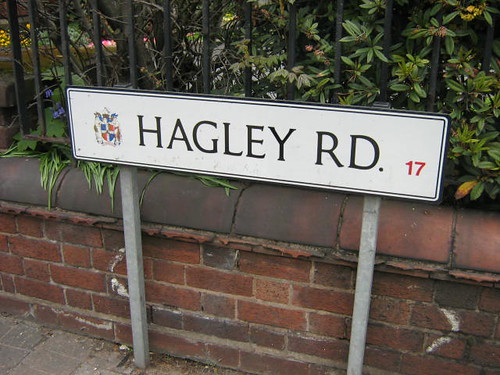
7,000 people braved the rain yesterday to march from Hagley Road to Centenary Square in a bid to call on the government to "halt the job crisis". Demonstrators joined in from all over the country, including steel workers from the beleaguered Teesside Cast Products.

Workers are calling for a temporary short-time working subsidy to keep skilled people in work and halt a "tsunami of job losses" and the permanent disappearance of skilled jobs in manufacturing. "We need factories and plants open for when recovery comes because if they go they will be gone forever," noted Unite joint leader Tony Woodley in Centenary Square.

While the usual suspects in the financial sector keep announcing "signs of recovery", manufacturing in the UK has claimed 67,000 jobs in the first three months of 2009 alone (compared to 29,000 in January-March 2008) .

Birmingham was picked to host the event as the West Midlands is amongst the worst-hit region by the recession with almost one person out of ten now out of work. 88 per cent of the region's losses has come from manufacturing. In turn these are the people who start defaulting on their mortgages - with a dramatic knock-on effect.

The UK secondary sector employs just short of 3 million people and the automotive industry alone makes for the third biggest market in Europe. Yet, the current hemorraging of jobs we are witnessing doesn't seem to be regarded as a top priority.

The Government rustled up massive amounts at the blink of an eye to bail out the banks. But, in the words of Tony Woodley, "It's no good putting £900bn into bailing out the banks if the banks are not releasing funds to keep cashload available. The Government has to show Mr and Mrs Ordinary in the streets here that [it] cares about their jobs [and] cares about people losing their homes".

The Birmingham demo netted the unexpected support of former CBI boss Lord Digby Jones. "I'm losing my marching virginity today", he said on joining the rally. "We've got to get the skills of this country in manufacturing kept, maintained, ready for the upturn. This government aren't putting anything into making sure that happens".

Speaking on BBC Radio 4's Today, Jones, himself a Brummie, said: "It is the duty of a government to invest in the short term in the skills of the country to make sure that, when the upturn comes, the flexibility can return because you've got skilled people in work. You can have all the flexible labour market in the world but, if you haven't got anybody in work, what's the point? I don't want the investors in manufacturing in a year's time to say: 'Well, we haven't got any skilled people in manufacturing in Britain we'll go somewhere else'".

"On this issue Unite are absolutely right", he added.

Thursday, May 07, 2009

Victory for the Fair Tips Campaign

The unbelievable scam of big corporations nicking the waiters' spare change may soon come to an end.

Remember last year's Fair Tips Campaign? Well, after a year of hearing the big restaurant chains arguing the toss, the Unions scored a massive victory.

The Government announced yesterday "that restaurants and cafés will be banned from using tips to pay basic wages from October". Chains such as Cafe' Rouge and Bella Italia were in fact routinely paying their staff below the minimum wage (as little as £3 an hour), using a portion of the tips to cover the difference while scrounging the remaining part.

Most pathetically, the British Hospitality Association, which represents the hotel and restaurant business, warned that ending the scam may result in "as many as 45,000 job losses".

Yet some of these scrounging freeloaders, just to give you an idea, belong to American private equity giant Blackstone - a company which "recorded a 56 per cent rise on its pre-tax profits last year to £44m on earnings of £248m".

And now the same owners of Porsches and Mercedeses, mansions and swimming pools, the makers of glossy 'Welcome Packs' that tell you how to smile (each costing ten times more than a waiter's daily wage), would really rather leave their Pizza Express branch understaffed than hand the tips back to their legitimate owners.

If the bloodsuckers really fear for their humongous dividends, maybe they could try and cut down on those managers' meetings at luxury hotels with free food, entertainment or even trips to exotic places.

Or perhaps, if it's true that 45,000 really may have to go, then the businessmen and women should try and wait on tables themselves and then see what it looks like when money handed over to you as a tip to a faultless service is snatched before you even find out.